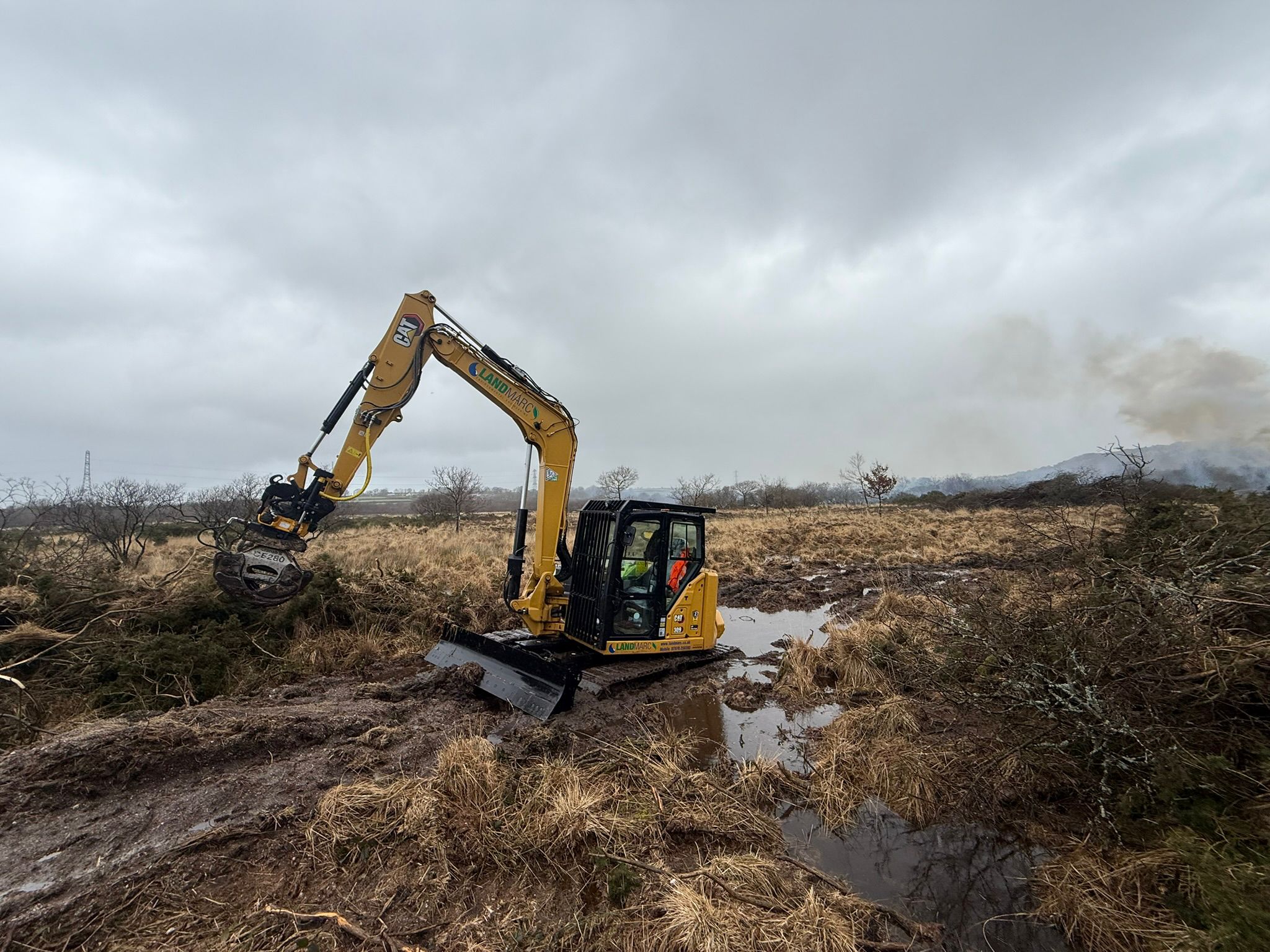
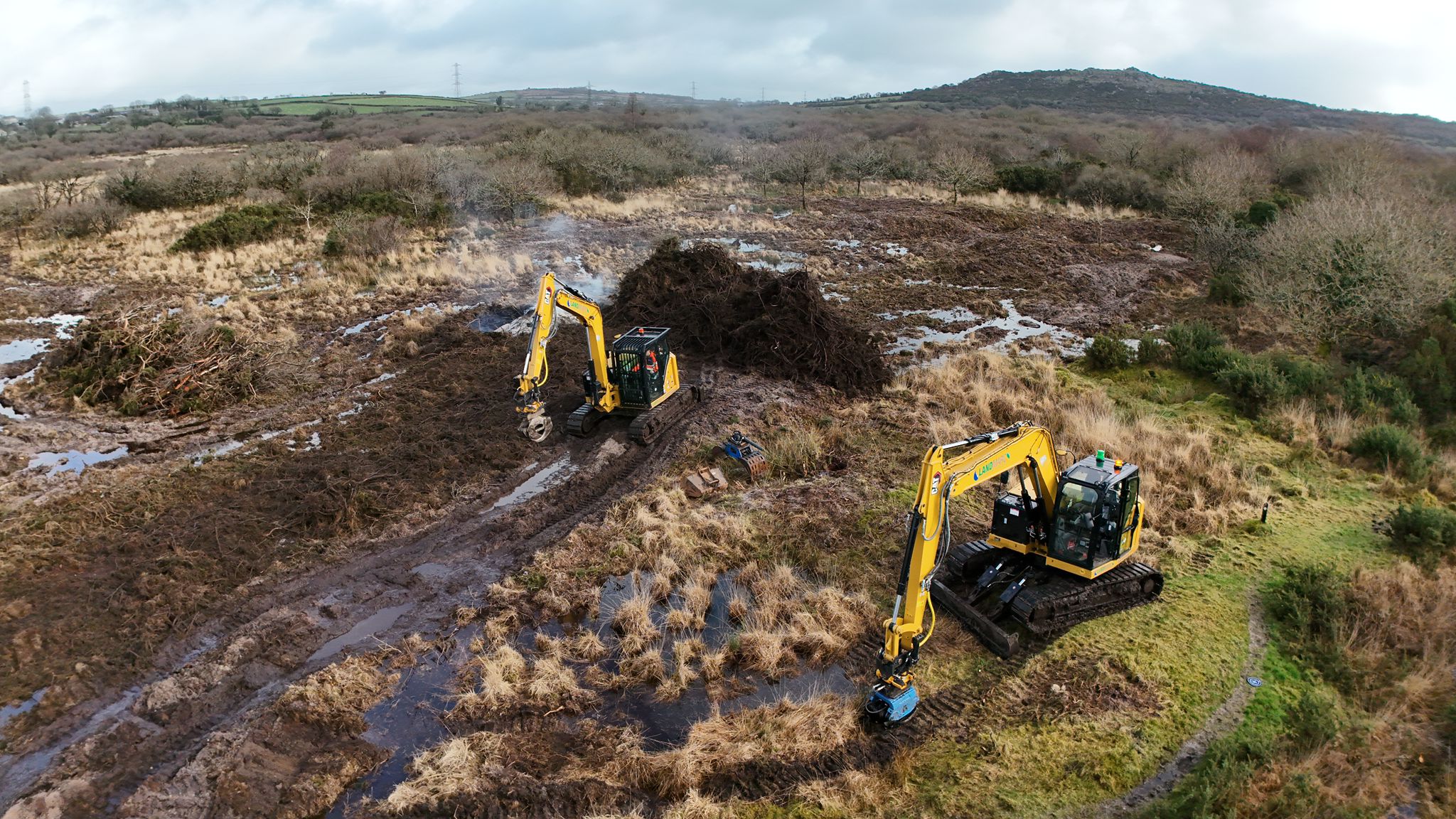
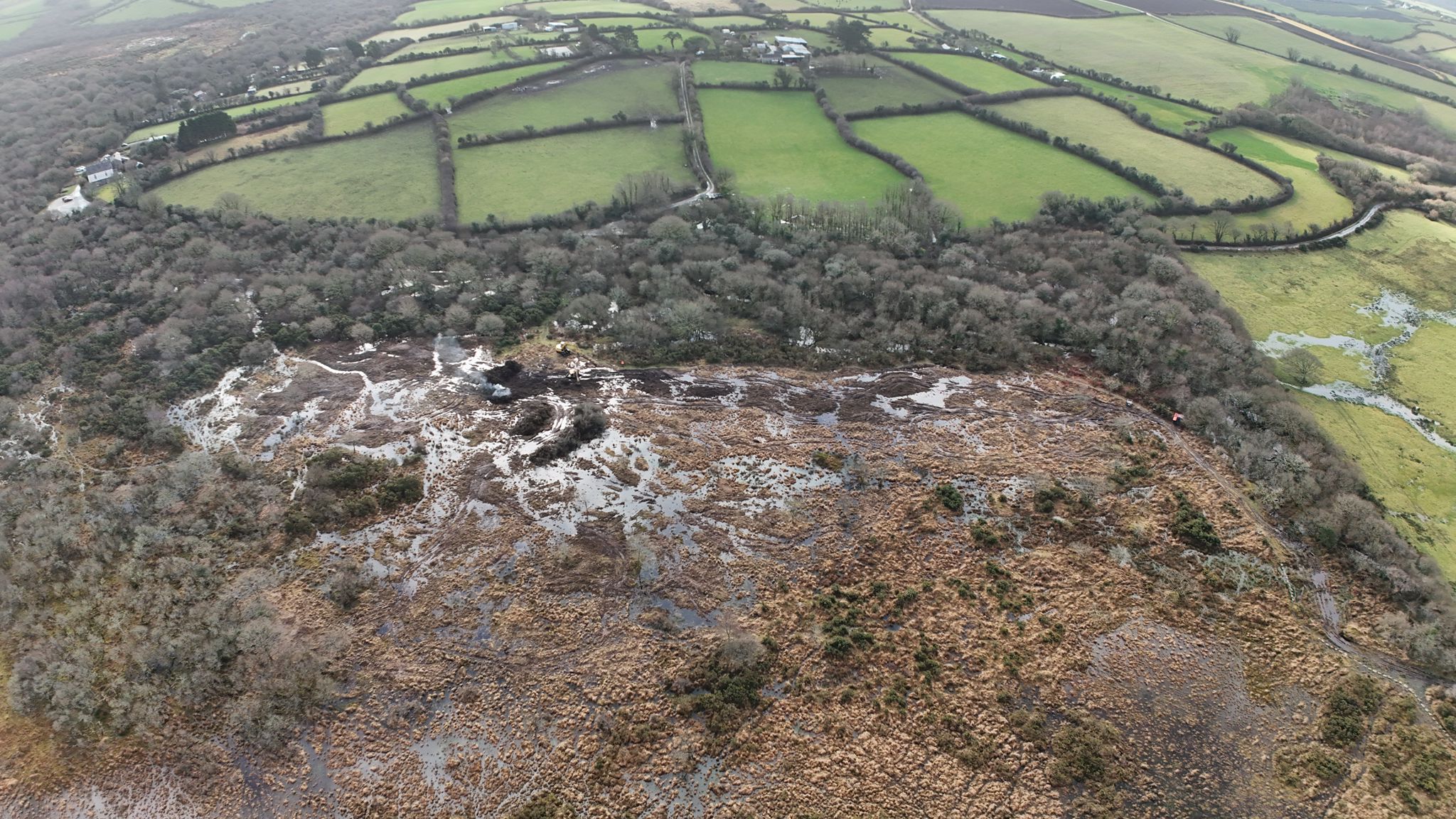
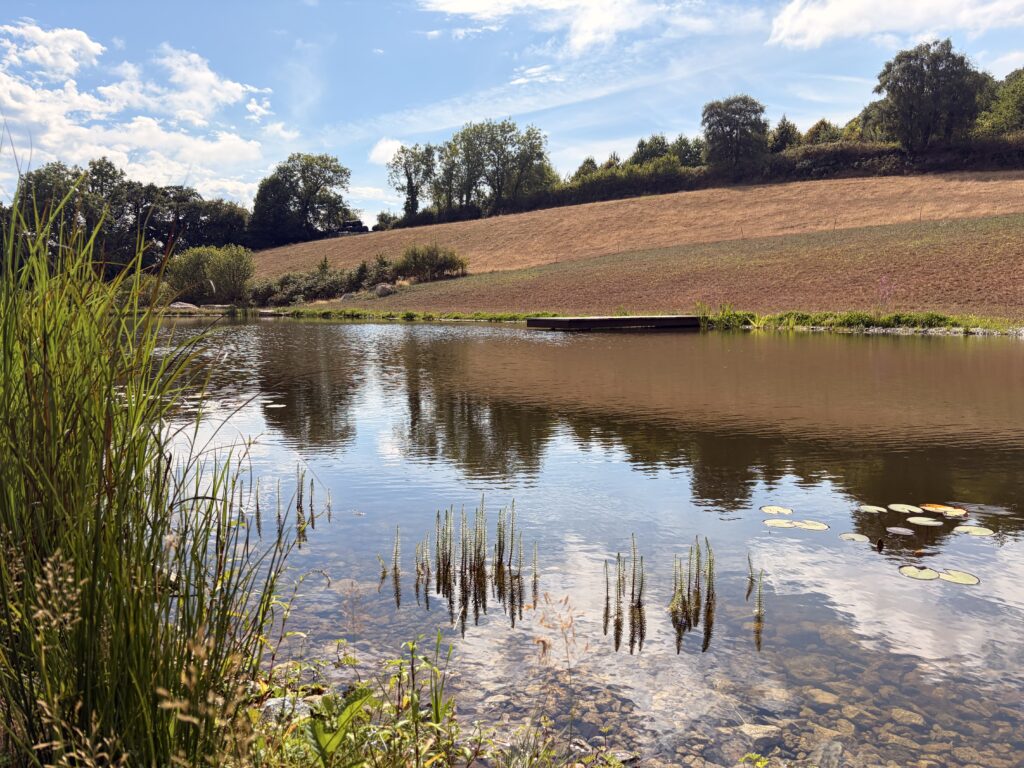
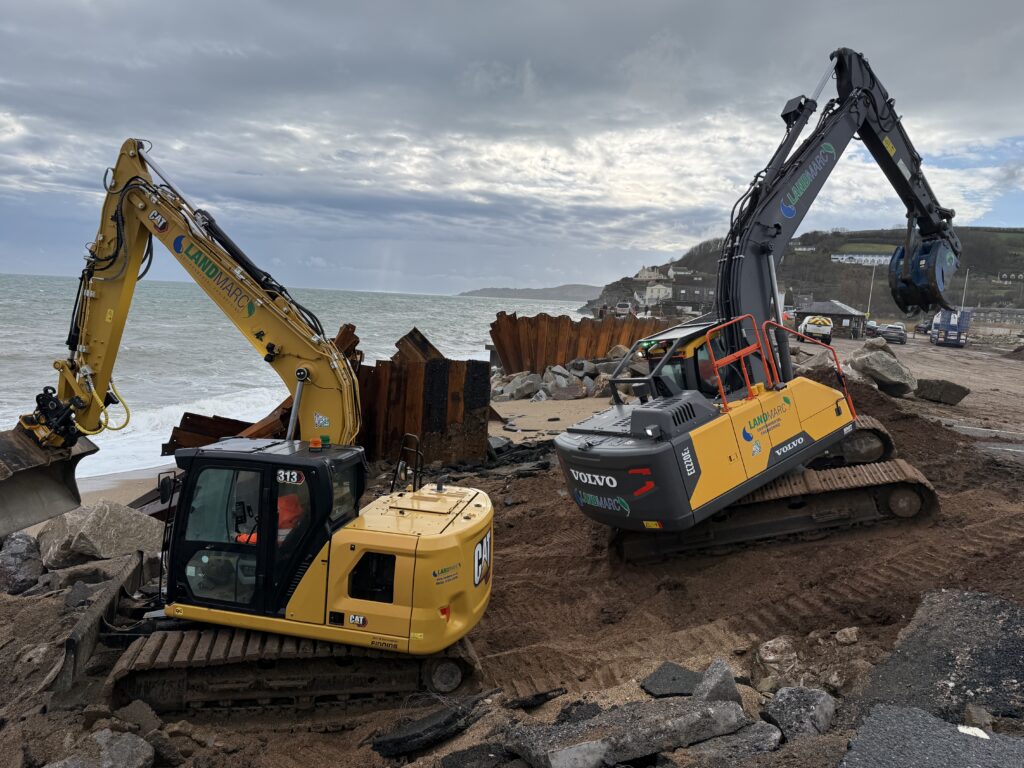
We have been back in Cornwall over the past few weeks working for Cornwall Wildlife Trust. The areas at Lowertown Moor in the Helman Tor Nature Reserve and the nearby Quoit Heathland are an extension of previous clearance works we have undertaken over the past few years.
The latest phase of habitat management sees our specialist team working in complex mosaic landscapes of wet and dry heathland, boggy grasslands, scrub, and open water. These areas — important for species such as reed buntings and marsh fritillary butterflies — have historically faced challenges from invasive scrub and changing land use. Active clearance and restoration support the heathland restoration for stock, regeneration of native plants, improve habitat connectivity, and create vital conditions for invertebrates, reptiles, birds, and mammals to thrive.
Building on this groundwork, previous Landmarc-led projects with Cornwall Wildlife Trust demonstrated the impact of habitat enhancement. Across sites like Breney Common and Red Moor, efforts to remove invasive scrub and selectively manage woody vegetation have reduced wildfire risk, improved soil health, and opened up spaces that encourage natural regeneration of flora and fauna. Machinery operated on sustainable bio-oil to ensure sensitive treatment of the terrain while enhancing long-term ecological outcomes.
At Quoit Heathland, conservation teams are supporting the maintenance of its unique heath mosaic — a habitat characterised by tussocky grasses, bogs, and wet heath that benefits a range of specialist species, including evidence of otters in wetter areas. Meanwhile, Lowertown Moor restoration focuses on reinstating natural hydrology and vegetation structure, creating a richer, more resilient environment for priority wildlife within the wider Helman Tor reserve network.